
SABSCAN
Identifying potential genetic causes of miscarriage through Non-Invasive Prenatal Testing (NIPT).
Navigating Early Pregnancy Loss:
The Role of Genetic Aneuploidy Screening
At GNTlabs, we deeply understand that every pregnancy is a fragile miracle. We are keenly aware that this inherent fragility can, unfortunately, culminate in early pregnancy loss—a profoundly challenging event for patients and their families. To support clinicians and families in navigating these difficult cases, we developed SABSCAN. This Non-Invasive Prenatal Test (NIPT) helps identify potential chromosome-related causes of pregnancy loss, providing vital information for accurate diagnosis and informed patient management. SABSCAN is particularly valuable when traditional tissue-based diagnostic approaches aren't feasible or deliver inconclusive results.
When to Consider SABSCAN
SABSCAN offers a valuable screening alternative to direct diagnostic genetic analysis of conceptus tissue obtained via surgical intervention. This non-invasive blood test is particularly well-suited for situations where:
- Direct invasive procedures for tissue collection might be undesirable or technically unavailable at the time of diagnosis of unviable conceptus.
- Conceptus tissue can't be obtained.
- Conceptus tissue is contaminated with maternal tissue, a common issue detected in up to 25% of samples using precise molecular methods.
When and how to sample maternal blood for SABSCAN
- Immediately after diagnosis of unviable conceptus.
- Prior to anesthesia for dilation and curettage (D&C).
- Within 24 hours after a complete miscarriage.
- Due to frequent contamination of fetal tissue with maternal tissue (up to 25% of samples), the SABSCAN screening test is recommended as a reliable backup option, even when POC tissue is primarily sent to GNTlabs for a diagnostic approach.
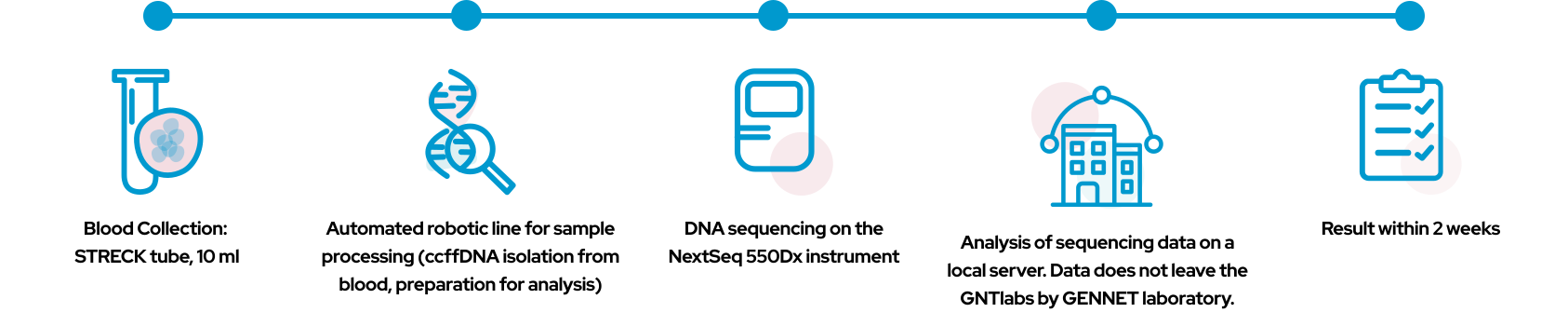
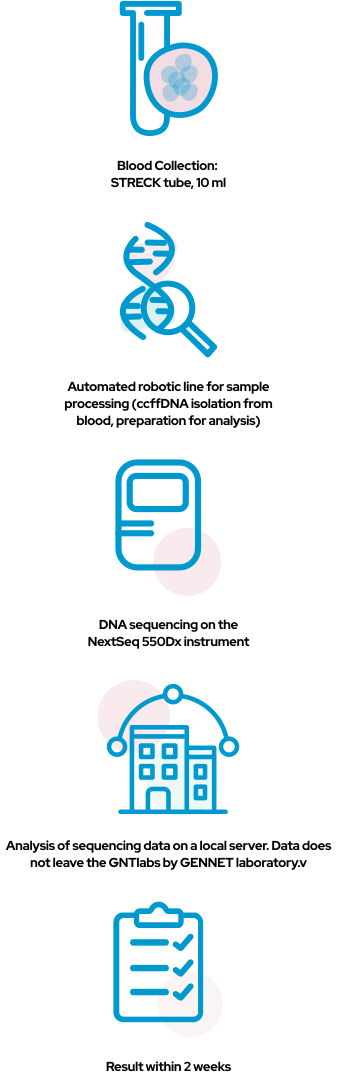
For SABSCAN, blood samples are collected in Streck BCT tubes, which are specifically designed to stabilize cell-free DNA.
How is the examination conducted?
- The test is performed from the 7th week of pregnancy.
- We collect a blood sample from the pregnant woman, which is then examined in our laboratory.
- The test results are available within 2 weeks.
How the Test Works
SABSCAN operates on the well-established principle of Non-Invasive Prenatal Testing (NIPT), a blood-based genetic screening method. The test analyzes cell-free DNA (cfDNA) that circulates in the pregnant individual's bloodstream.
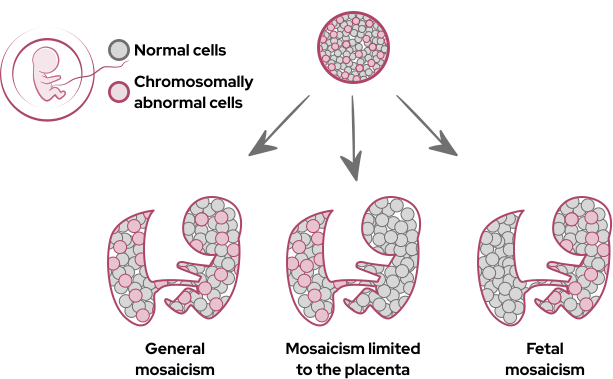
SABSCAN primarily focuses on detecting aneuploidies—changes in the number of chromosomes. This includes the presence of an extra chromosome (known as trisomy e.g., trisomies 13, 16, 18, 21 or 22) or the absence of a chromosome (known as monosomy, e.g., monosomy X) which are typically cause of miscarriage. The test can also identify partial chromosomal losses (deletions) or gains (duplications).
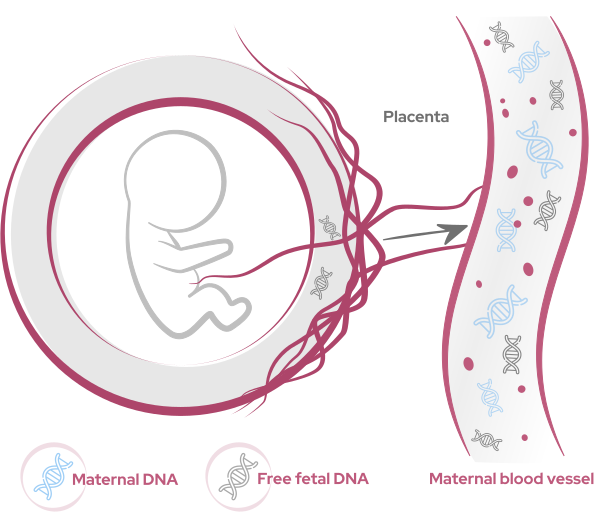
The primary source of the fetal component of cfDNA (cell-free fetal DNA or cffDNA) is the placenta. This vital organ connects the mother to the developing fetus, facilitating nutrient supply and metabolic exchange. As placental cells constantly divide and die, they release fragments of cffDNA into the maternal bloodstream, where it mixes with the mother's own cfDNA.
The presence of cffDNA in maternal blood offers a unique opportunity to analyze the genetic status of the conceptus and uncover potential genetic causes of early pregnancy loss. While SABSCAN analysis is typically feasible from the 7th week of pregnancy (though cffDNA levels can vary among patients), it's crucial to note the narrow window for post-loss analysis (complete miscarriage): cffDNA persists in the maternal bloodstream for a very limited time, generally no more than 24 hours, following a pregnancy loss.
Understanding Fetal Fraction
Fetal Fraction (FF) is a crucial metric in Non-Invasive Prenatal Testing (NIPT), representing the proportion of cell-free fetal DNA (cffDNA) relative to the total cell-free DNA (cfDNA) found in the maternal bloodstream. While a minimum FF of 4% is typically considered the standard lower limit for issuing reliable NIPT results, a significant challenge in early pregnancy loss is often the presence of low FF. SABSCAN's advanced methodology enables us to deliver results even with lower fetal fraction (FF) values than typically possible. This makes SABSCAN particularly useful for samples from early pregnancy losses, where cffDNA levels are often inherently lower. While some analyses might be feasible as early as the 5th week, collecting samples from the 7th week of pregnancy maximizes the chance of a conclusive result.
Crucially, cffDNA is cleared from the maternal bloodstream rapidly following a pregnancy loss. Therefore, to ensure the highest chance of obtaining an interpretable SABSCAN result, sample collection is strongly advised either before anesthesia for Dilation and Curettage (D&C) or very soon after a miscarriage has been detected.